Floor choice involves comfort, moisture exposure, maintenance and appearance.
Surface temperature depends on the floor assembly, room conditions and sunlight. Check the finish and substrate in the actual property rather than assuming a material will feel the same in every room.
The four options compared
| Finish | Strengths here | Weaknesses here |
|---|---|---|
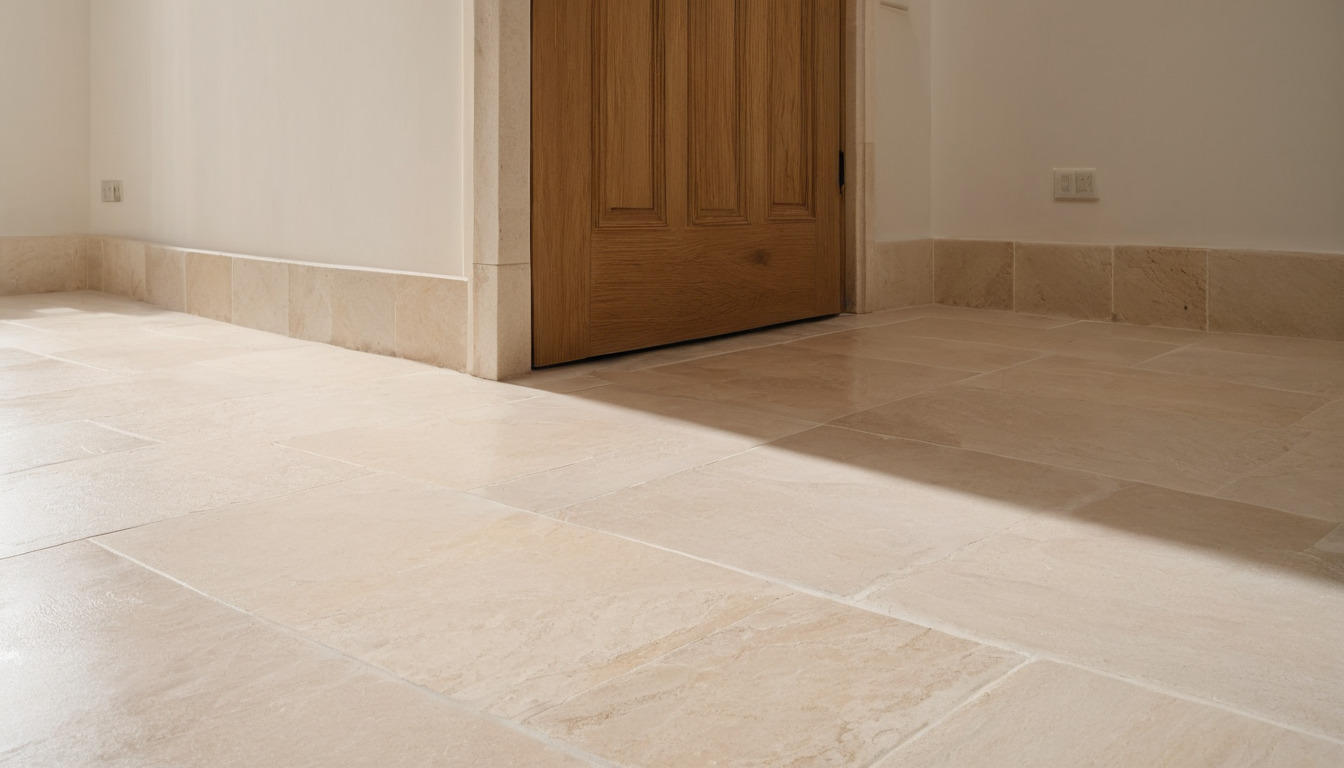
| Honed limestone | Cool underfoot, natural variation, ages gracefully, suits the vernacular | Porous — stains from oil and acid, needs sealing, honed surface shows traffic |
| Large-format porcelain | Low water absorption for products meeting the relevant porcelain standard; check product and grout | Hard and unforgiving underfoot, grout lines still collect dirt, cold in winter |
| Engineered oak | Warmer underfoot, stable across humidity swings, refinishable if wear layer allows | Vulnerable to standing water; check substrate moisture and installation system |
| Solid timber | Authentic, fully refinishable | Movement depends on species, board size and conditioning; follow manufacturer instructions |
Stone: the sealing question
Natural stone is porous to different degrees. Limestone and marble are calcium carbonate and will etch on contact with anything acidic — lemon, vinegar, wine, and most descaling products. Granite is far harder and far more forgiving. Travertine is beautiful and full of voids that need filling.
A penetrating sealer can slow staining but cannot make natural stone stain-proof. Follow the stone and sealer suppliers’ cleaning and reapplication instructions.
Never use an acidic or vinegar-based cleaner on limestone, marble or travertine. It removes a microscopic layer of the stone each time. The result is a dull patch that looks like wear and cannot be cleaned away — it has to be re-polished.
Porcelain: the practical default
Porcelain tile can be a durable choice for a busy floor. Check the particular tile's absorption, slip rating, surface finish, grout and cleaning instructions; stains and damage are still possible.
Two things to get right with large-format porcelain:
- Flatness. Large tiles need substrate flatness within the tile-system tolerance to reduce lippage. Check both tile and substrate requirements.
- Grout width and colour. A rectified tile allows a narrow joint, but a narrow joint in a hot climate gives no room for movement. Follow the tile manufacturer's minimum, and choose a grout colour you can live with at floor level, not at showroom eye height.
Timber: how to make it work
Timber floors can work where the product and assembly suit the room. Test substrate moisture and plan for spills and cleaning.
- Confirm the screed moisture content before anything is laid. This is a measurement, not a waiting period — ask for the reading.
- Use any moisture-control layer required by the flooring and adhesive manufacturers for the measured substrate.
- Acclimatis the boards in the room, in the conditioned environment they will live in.
- Compare engineered and solid products for movement, maintenance and any promised refinishing.
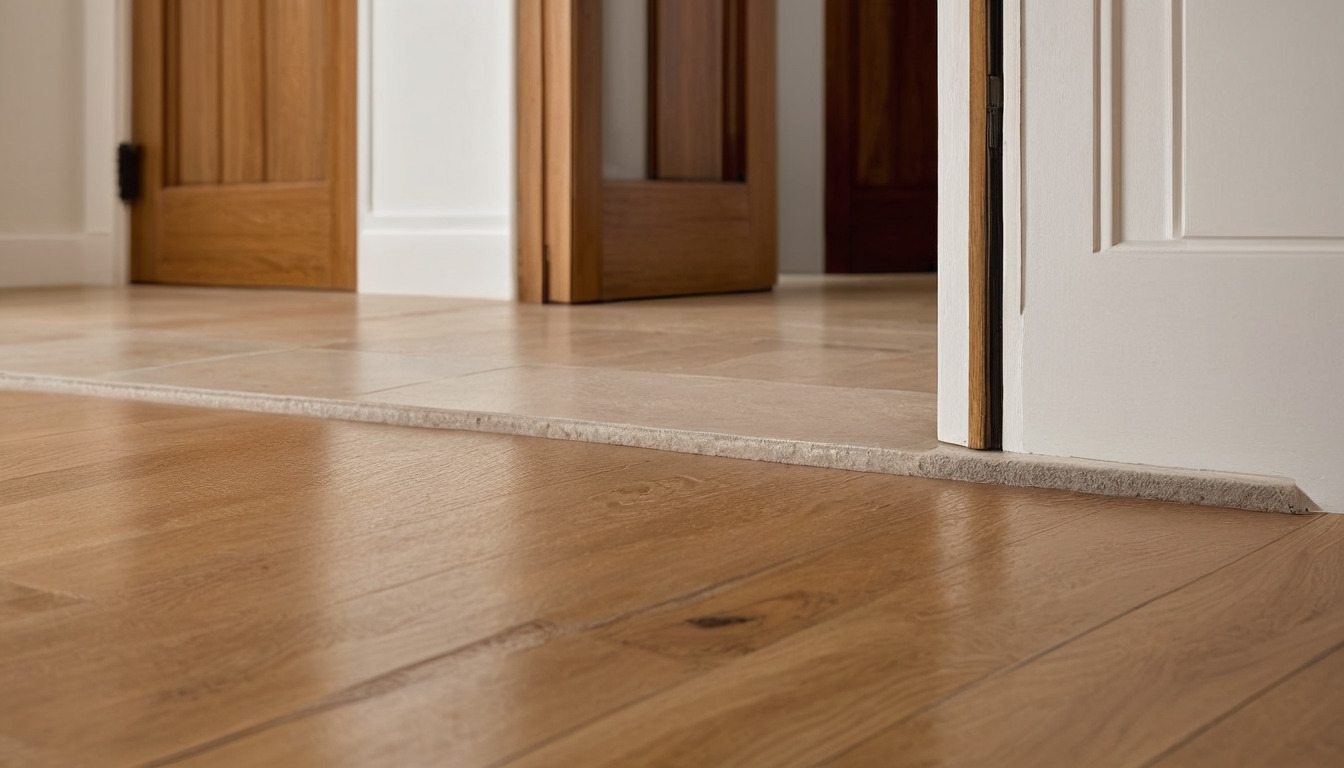
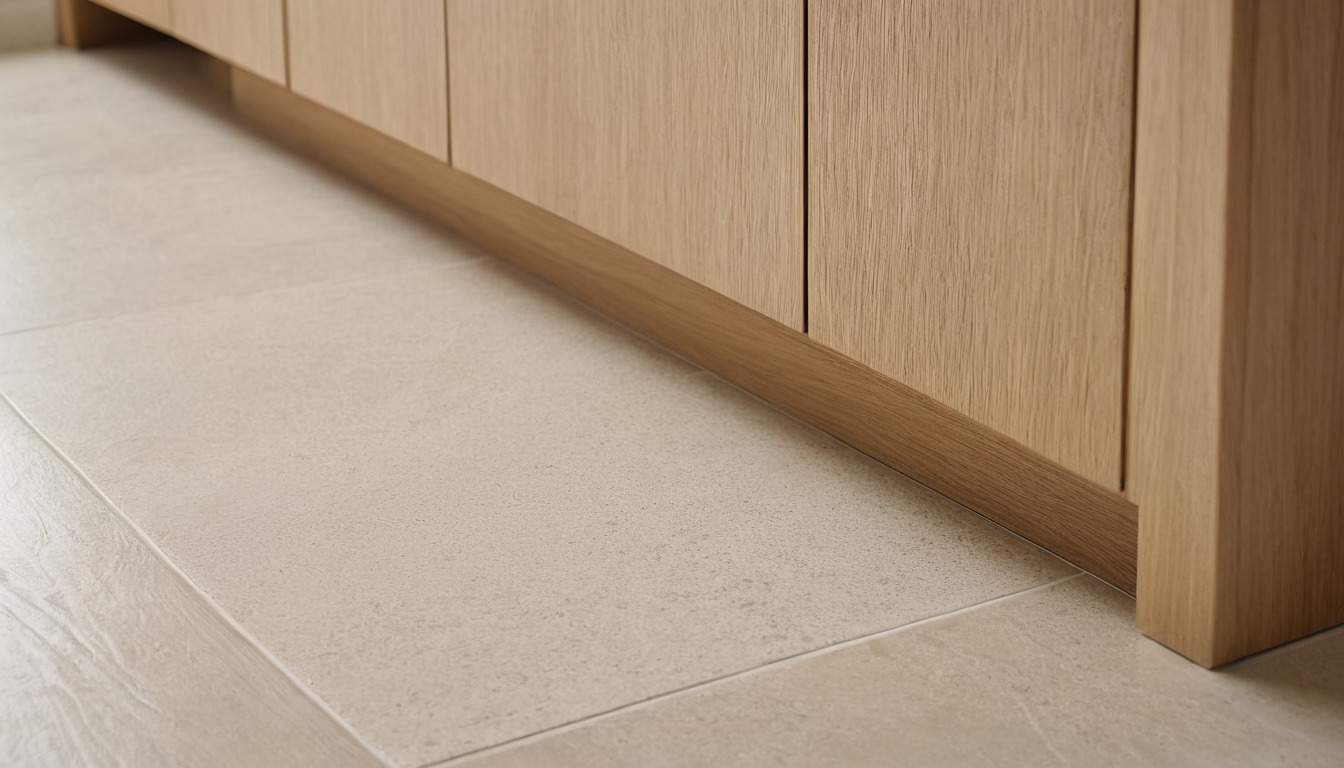
- Leave the expansion gap the manufacturer specifies, and do not let a kitchen island or a fixed threshold pin the floor down.
- Specify a finish that can be spot-repaired. Compare spot-repair and refinishing instructions for the chosen finish.
The corridor between a pool deck and an interior is the hardest place for timber in a villa. If that threshold is important to the design, plan for a change of material there rather than planning for the timber to survive it.