Large glazed areas need a solar-control strategy suited to their orientation and window specification.
A west-facing glazed wall may admit afternoon solar heat. Check the glazing's solar heat gain coefficient, shading and comfort near the glass before selecting a solution.
What the glass can do
| Option | Effect | Limit |
|---|---|---|
| Clear float | Passes most visible light and most solar energy | Check SHGC against the room and climate |
| Tinted (grey, bronze, green) | Absorbs solar energy, reduces glare | Check product data and compatibility with film or shading |
| Low-E coating | Low-emissivity coating reduces radiative heat transfer; solar-control versions also reduce solar gain | Select U-factor and SHGC for the actual cooling need |
| Double glazed with argon | Cuts conduction and improves acoustic performance | Adds cost and weight; check the frame is thermally broken or the benefit is partly lost |
| Solar control / spectrally selective | Passes visible light, rejects near-infrared | Compare visible light and SHGC ratings |
Frame thermal performance affects heat flow and condensation risk. Compare the full window assembly, including frame and installation detail.
Compare exterior and interior shading
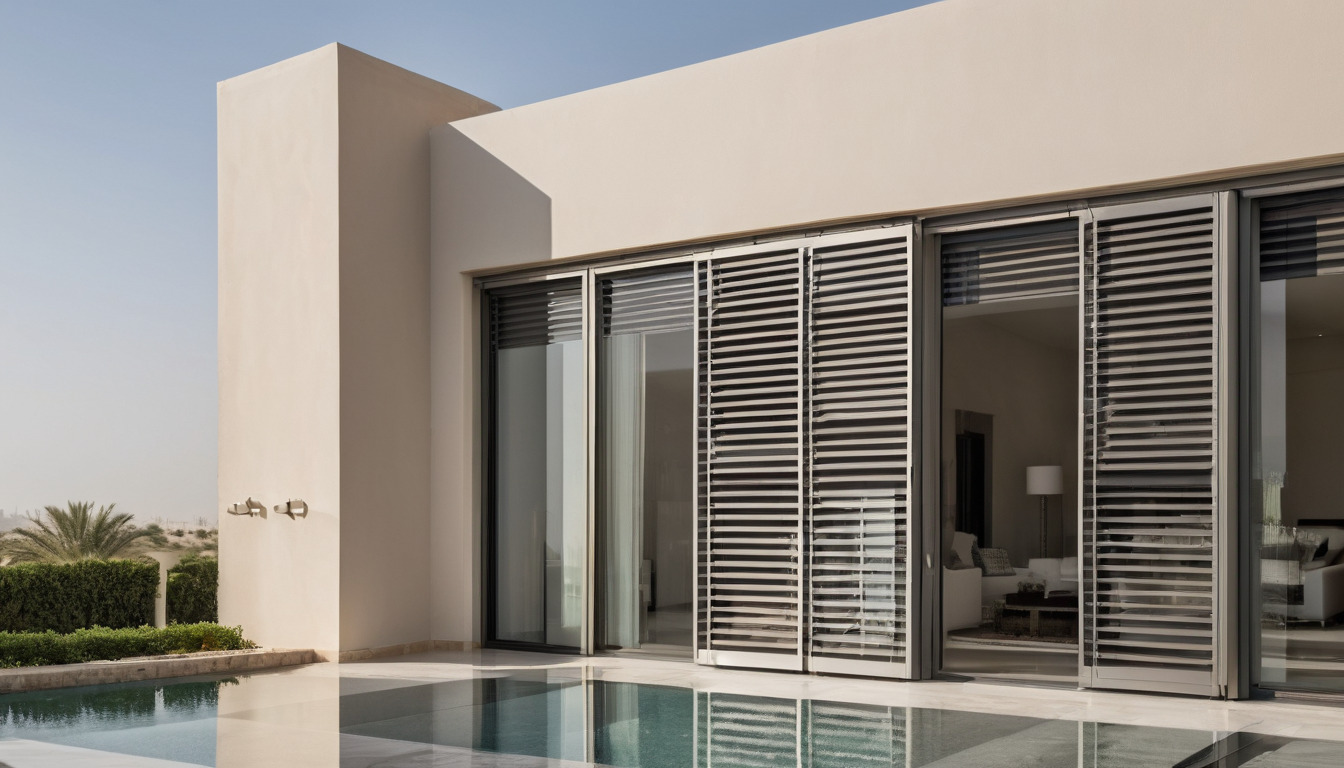
Exterior shading can reduce solar gain before it reaches the glass. Interior blinds and curtains can also reduce glare and heat gain; results depend on the product, glazing, orientation and use.
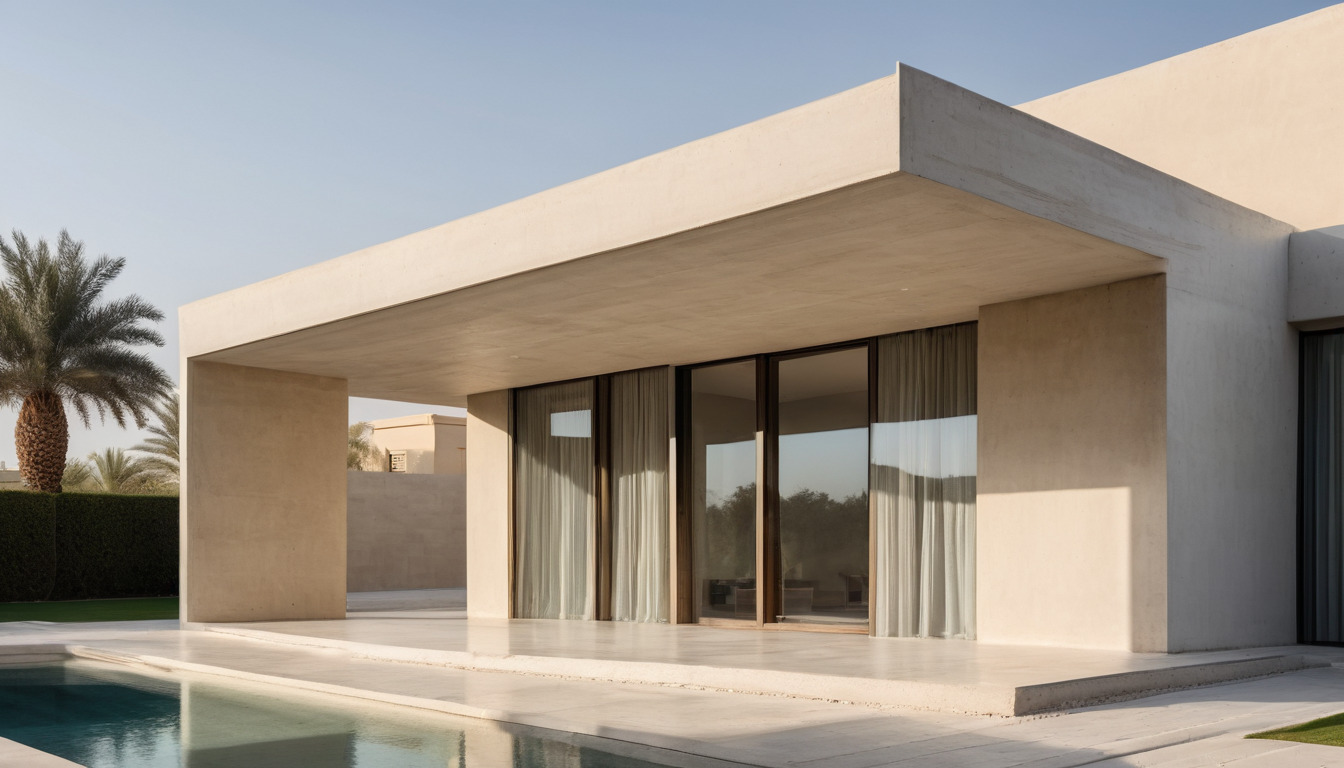
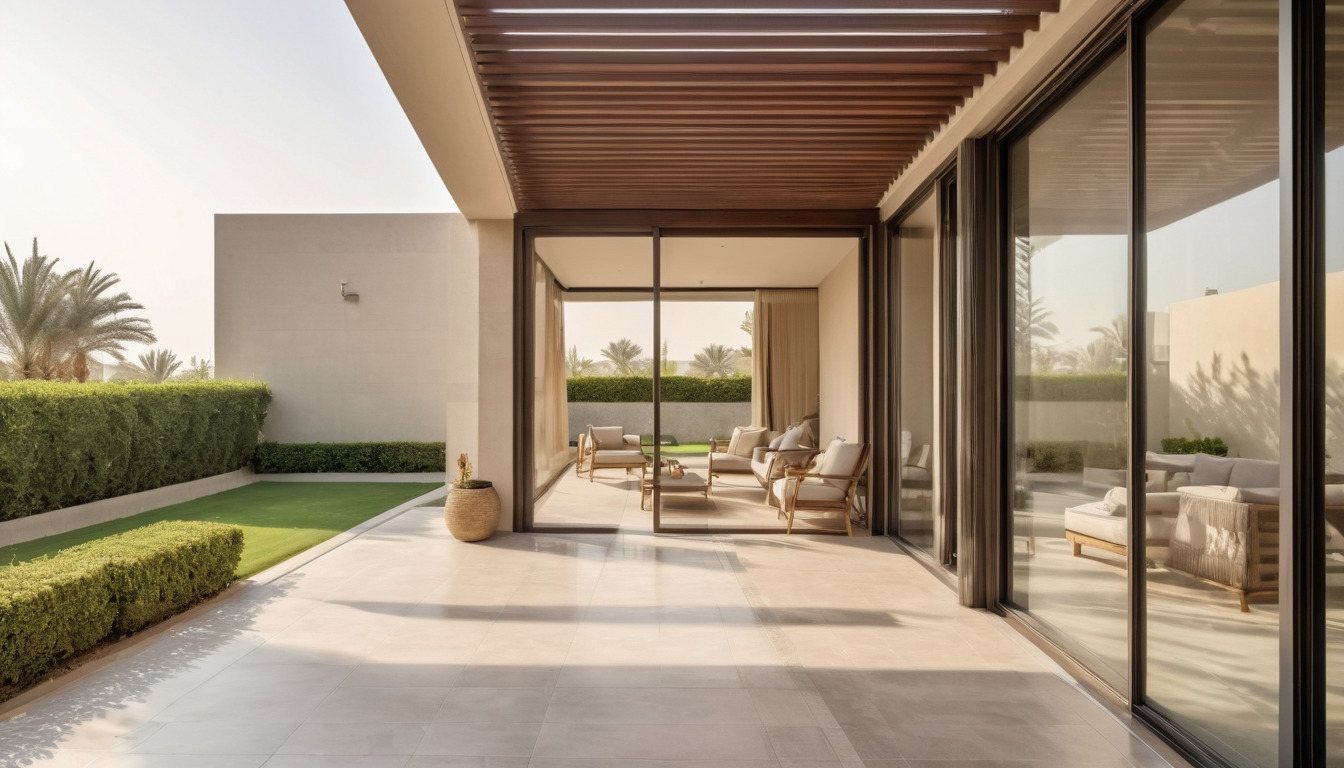
- Fixed overhangs and deep reveals can shade a window when their geometry suits the sun angle. Model the effect before specifying them.
- Adjustable external louvres give you control and let a terrace be used at more hours of the day. Check the manufacturer's exposure rating — see the corrosion guide for why powder coat alone is not enough.
- Retractable awnings suit a terrace or a west-facing opening where you want shade on demand. Wind and salt are the enemies; specify accordingly and expect to maintain the mechanism.
- External screens and mesh cut radiation and glare while keeping some view. They collect dust and salt and need washing.
- Landscaping is underrated. A mature tree on the west side does what a louvre does, and improves the outdoor space at the same time.
What to do in an existing apartment
Facade changes in a managed tower often need building consent. Ask management what can be altered before specifying glazing or film.
That leaves internal measures, and they are worth doing in the right order:
- A solar screen or a reflective blind on the inside face of the glass, which intercepts radiation at the closest available point.
- A lined curtain behind it, which adds insulation at night and protects furnishing during the day.
- A window film with a documented solar-control rating, if building rules permit it. Ask an installer to confirm compatibility with the existing glass and warranty terms.
- Rearranging the room so that seating and sleeping positions are not in direct line of the worst afternoon sun.
Before applying film, confirm the glass make-up, the film manufacturer's compatibility guidance and building consent.
Comfort is not only temperature
Two rooms at the same air temperature feel different if one has a hot glazed wall in it. The body exchanges radiant heat with surrounding surfaces, so a hot pane near a chair can affect comfort even when the air temperature is acceptable. This is why shading matters even where the cooling capacity is already adequate — it is a comfort problem before it is an energy problem.